Hyderabad has no shortage of cafés, coworking spaces and lounges.
But almost none of them are built for the people who spend their entire working day moving across the city.
Upzy wants to change that.
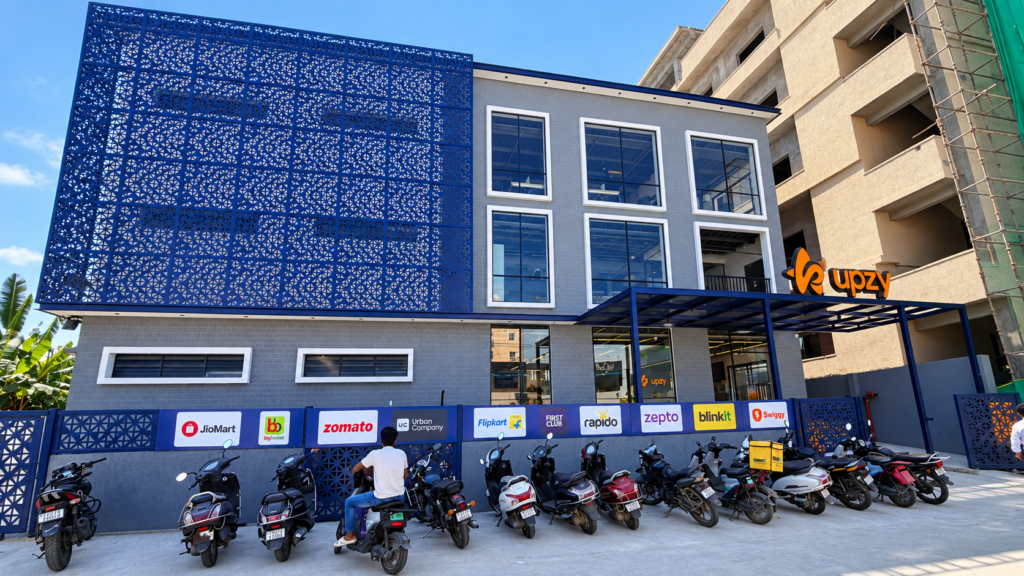
The newly opened Upzy House in Kondapur is a members’ club created specifically for gig workers — delivery riders, drivers and other platform workers who often spend hours on the road without reliable access to something as basic as a clean washroom, a place to sit, hot food or even a charging point for their phone.
The idea is surprisingly simple: give gig workers a place in the city that feels like it belongs to them.
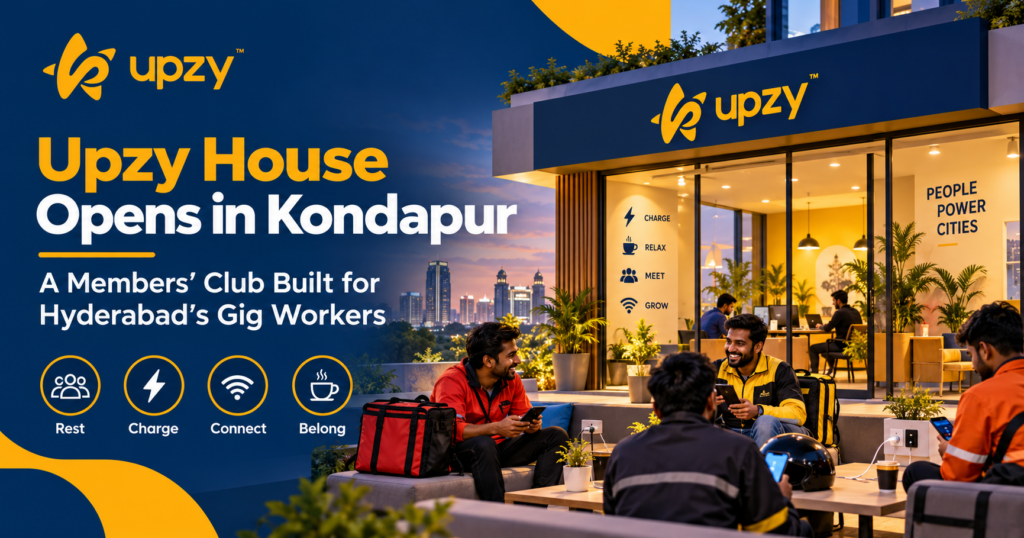
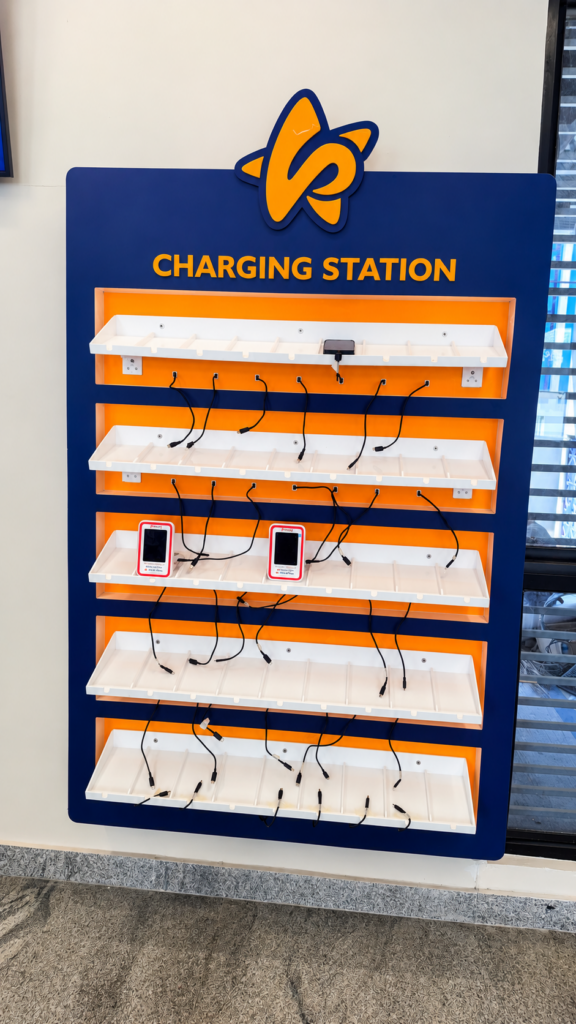
Upzy describes itself as a space to rest, refuel and take care of what matters. The Kondapur centre includes clean restrooms, meals, rest areas, phone charging, EV charging, a parcel address, community services and a Trust Desk that helps members with everyday documents. The companion app brings the membership pass, menus and community together in one place.
What makes the idea more interesting is how Upzy arrived at the problem.
Founder Aditya Vuchi says the team has spoken in person to 4,163 delivery riders around Kondapur since March. According to those conversations, only around 5% said they had dependable access to a toilet provided by the company they worked with, while about 90% relied on roadside or public facilities. Those numbers are from Upzy’s own local survey rather than a nationally representative study, but they make the everyday infrastructure gap very visible.
For most of us, finding somewhere to charge a phone or use a washroom is barely worth thinking about.
For someone whose earnings depend on staying outside for most of the day, those small things can shape the entire working experience.
That is why Upzy feels different from the usual startup conversation around the gig economy.
Most technology platforms have spent years making delivery faster, routing smarter and customer experiences smoother. Upzy is looking at the person on the other side of that system and asking what their working day actually looks like.
The name itself comes from “up + easy.” The larger ambition is not to pretend that one building can solve every challenge associated with gig work, but to make the working day a little easier and eventually create pathways around what the team describes as savings, skills and standing.
Upzy House is currently open on High-Tension Line Road in Kondapur from 6 AM to 11 PM, seven days a week.
And the facility goes beyond a lounge.
The Upzy app lists services including EV charging, restrooms, a lounge, visiting doctor hours, physiotherapy, grooming and haircuts, high-speed Wi-Fi and café menus. Members can also check live facility availability and queue information before making a trip to the centre. The app currently supports English, Telugu and Hindi.
That may sound like a collection of small utilities.
Together, however, they begin to resemble something gig workers have rarely had: workplace infrastructure.
An office employee usually has a desk, washroom, cafeteria, internet connection, charging sockets and somewhere to receive a parcel without thinking about any of it.
A delivery rider technically has a workplace too.
It just happens to be the entire city.
Upzy is essentially trying to create the missing office between orders.
The company is being built by repeat Hyderabad entrepreneur Aditya Vuchi, whose earlier journey includes MediaMint, Zippr and Doosra, and who now also runs family investment office VCMint. Aditya has said he is building Upzy alongside Niranjan Seelam, an entrepreneur with previous experience at redBus.
There is an important distinction in how they are approaching the idea.
Upzy is not being positioned simply as a welfare initiative.
Even before launch, Vuchi said the goal was to build a commercially sustainable business around gig workers as customers, rather than create infrastructure that depends indefinitely on corporate goodwill or grants. The earlier plan was to first understand which services workers actually use, build density within Hyderabad and only then think about expanding to other cities.
That approach could ultimately determine whether the concept scales.
The real opportunity may not lie in building one impressive facility in Kondapur. It lies in making these spaces common enough that a rider can find one within a few minutes wherever they happen to be working.
Upzy is also arriving at an interesting time for Hyderabad. The Telangana government and platforms such as Zepto have recently begun rolling out dedicated support hubs for gig workers too, showing that worker infrastructure is becoming a much more visible part of the gig economy conversation.
There is another dimension worth watching as well.
Better access to clean washrooms and safe resting spaces could make gig work more accessible to women. Vuchi has specifically highlighted these two issues while discussing what could improve women’s participation in gig work.
For now, Upzy House is one building in Kondapur.
But sometimes startups become interesting not because they invent an entirely new technology, but because they notice something everyone else has learned to ignore.
Thousands of riders pass through Hyderabad every day delivering food, groceries, packages and people.
We built apps for them.
We built algorithms around them.
We built businesses that depend on them.
Upzy is building them a place to sit down.
And that might be a much bigger idea than it first appears.